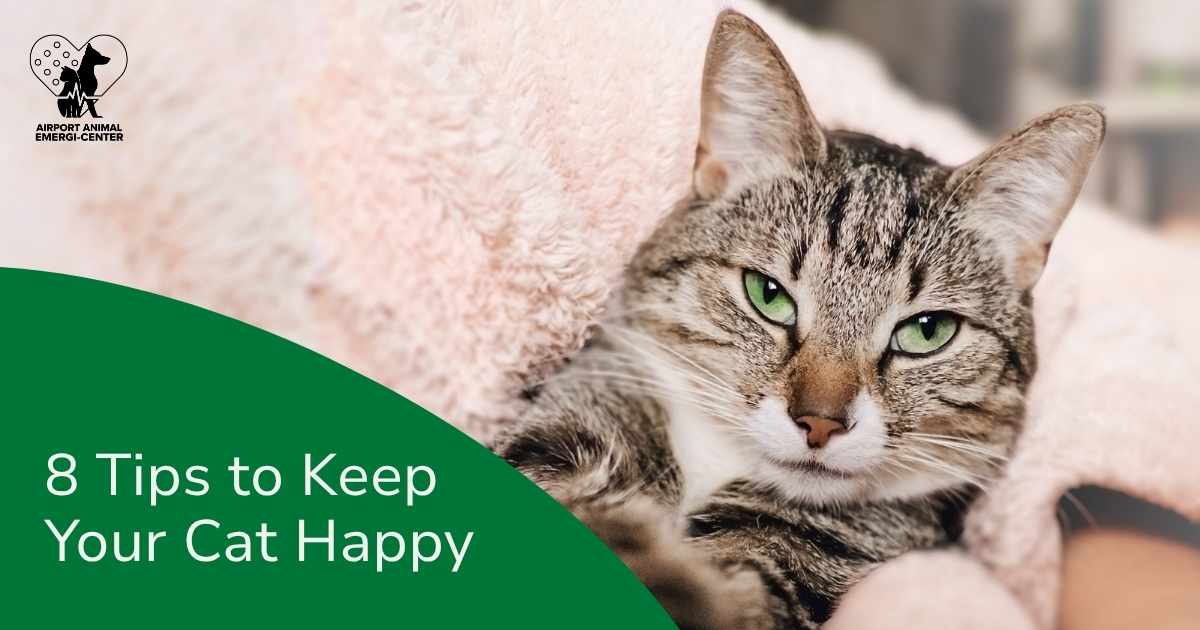
Cats are quiet about a lot of things, including their own happiness. A cat who feels secure, stimulated, and comfortable tends to show it in small ways: relaxed grooming, easy sleep, a mew greeting at the door, a tail that lifts when you walk into the room. When a cat stops sending those signals, it usually means something in their environment, routine, or body needs attention.
Feline happiness is within your control. Most of it comes down to a handful of habits you can build into an ordinary week. Here are eight veterinarian-backed ways to help your cat thrive at home.
Before changing anything, spend a few days watching how your cat moves throughout the day. Content cats explore, stretch out in open spaces, play, and seek you out on their own terms. A cat who hides more than usual, overgrooms, stops using the litter box, or grows unusually vocal is communicating something. Learning your cat's baseline makes every other tip on this list easier to apply.
Cats are predators, and the urge to stalk, chase, and pounce does not disappear indoors. Short, daily play sessions with a wand toy, a feather teaser, or a small ball let your cat run through the full hunting sequence: spot, chase, catch, and "kill." Two or three ten-minute sessions do more for a cat's mood than a basket of toys left on the floor. Rotate a few toys in and out each week so novelty keeps the game interesting.
For a cat, up high is safe. Height gives them a lookout, a retreat, and a sense of ownership over their space. A cat tree, a set of wall shelves, or even a cleared spot on top of a key bookcase gives your cat somewhere to climb and survey the room. In homes with more than one pet, vertical space also lets cats coexist comfortably by claiming different levels instead of competing for the floor or shared beds.
Every cat needs a place to slip away from noise and activity. A covered bed, a cardboard box, or a quiet perch in a low-traffic room gives your cat somewhere to decompress. Choose a room away from roads, entryways, kitchen, or other loud areas. Retreats matter most during busy stretches at home, visits from guests, or thunderstorms. When a cat knows a safe spot is always available, the whole home starts to feel more predictable to them.
Litter box comfort is one of the most overlooked pieces of a cat's happiness. The general rule is one box per cat plus one extra, placed in quiet, easy-to-reach spots rather than tucked beside a noisy appliance. Size of the box matters, too. Big cats in small boxes tend to become unhappy or stressed to where they start finding other suitable "litterboxes" like hampers, clothing on the floor, bathtubs, etc. Scoop daily, keep the litter at a depth your cat prefers, and skip heavily scented products, which many cats dislike. A cat who feels good about the litter box tends to feel calmer and more confident everywhere else.
In the wild, a cat works for every meal. At home, food that simply appears in a bowl removes that natural effort. Puzzle feeders, snuffle mats, and treat balls turn eating into a small mental workout that keeps your cat engaged and wards off boredom. Feeding measured portions on a consistent schedule also supports a healthy weight, which keeps your cat active and comfortable for longer.
Cats find comfort in rhythm. Meals, play, and quiet time that land at roughly the same points in the day help your cat feel settled and in control of their world. Predictability becomes especially valuable during changes such as a move, a new work schedule, or a new pet in the home. Keeping the core routine steady gives your cat an anchor while everything else shifts around them.
Much of what a cat loves about the outside can be recreated without the risks. A window perch positioned toward a bird feeder offers hours of "cat TV." A pot of cat grass gives a safe outlet for nibbling. For cats who crave fresh air, a secure catio or harness-and-leash opens up the yard on your terms. These options give indoor-only cats a rich, engaging view of the world beyond the window.
A happy cat is more often a comfortable one. Pain, dental discomfort, and early illness are easy to miss in a species built to hide weakness, and they often show up first as a change in mood or behavior. Routine wellness exams let our veterinary team notice those subtle shifts early, so your cat stays comfortable and content throughout every season. When a cat's behavior changes in a way that puzzles you, a behavioral consultation can get to the root of it and help restore the bond you share.

5235 W. Washington St.
Indianapolis, IN 46241
(317) 248-0832