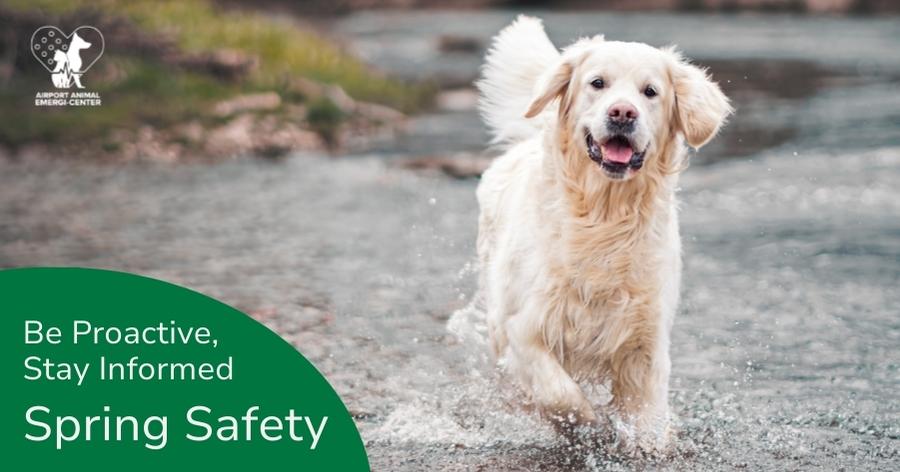
As spring returns to Indy, pets are eager to stretch their legs, sniff fresh air, and enjoy longer days outdoors. While the season brings opportunities to explore outdoors, it also introduces a variety of hazards.
Spring is the ideal time to refresh your pet’s safety and prevention routine, starting with the outdoor risks hiding right in your own backyard and neighborhood.
More sunlight and warmer temperatures mean more time outside but also brings an increase in environmental hazards that can affect your pet’s comfort and health.
Some of Central Indiana’s most common landscaping plants look beautiful but can be harmful if chewed. These include:
If you’re unsure about a plant in your yard or on a walking route, checkout ASPCA’s Toxic and Non-Toxic Plants Database.
Just like people, pets can struggle with uncomfortable allergy symptoms that affect their daily happiness and wellbeing. If your pet seems uncomfortable, our veterinarian can recommend allergy treatments or at-home care to keep symptoms under control. Signs of allergies in your pet:
Spring yardwork often introduces substances that can irritate paws or cause stomach upset. Wiping your pet’s paws after walks and limiting exposure immediately after lawn applications can help minimize irritation. Watch out for:
Fleas and ticks are active year-round, but their presence increases in the spring as temperatures rise and our outdoor activity picks up.
Your Flea & Tick Care Checklist
Heartworm disease is transmitted by mosquitoes, which become active as soon as temperatures rise above 50°F. Heartworms affect the heart, lungs, and blood vessels and can cause life-threatening illness if untreated.
Heartworm Protection Essentials
If a dose is missed, schedule a heartworm test before restarting medication to help avoid dangerous complications.
With consistent prevention and seasonal awareness, your pet can enjoy a healthy, comfortable spring.

5235 W. Washington St.
Indianapolis, IN 46241
(317) 248-0832